



Words About High Quality Canvas Art Print
🌟The Meaning Behind Lord Krishna’s Flute and Peacock Feather: A Practical Guide to Devotion, Décor, and Daily Joy🌟
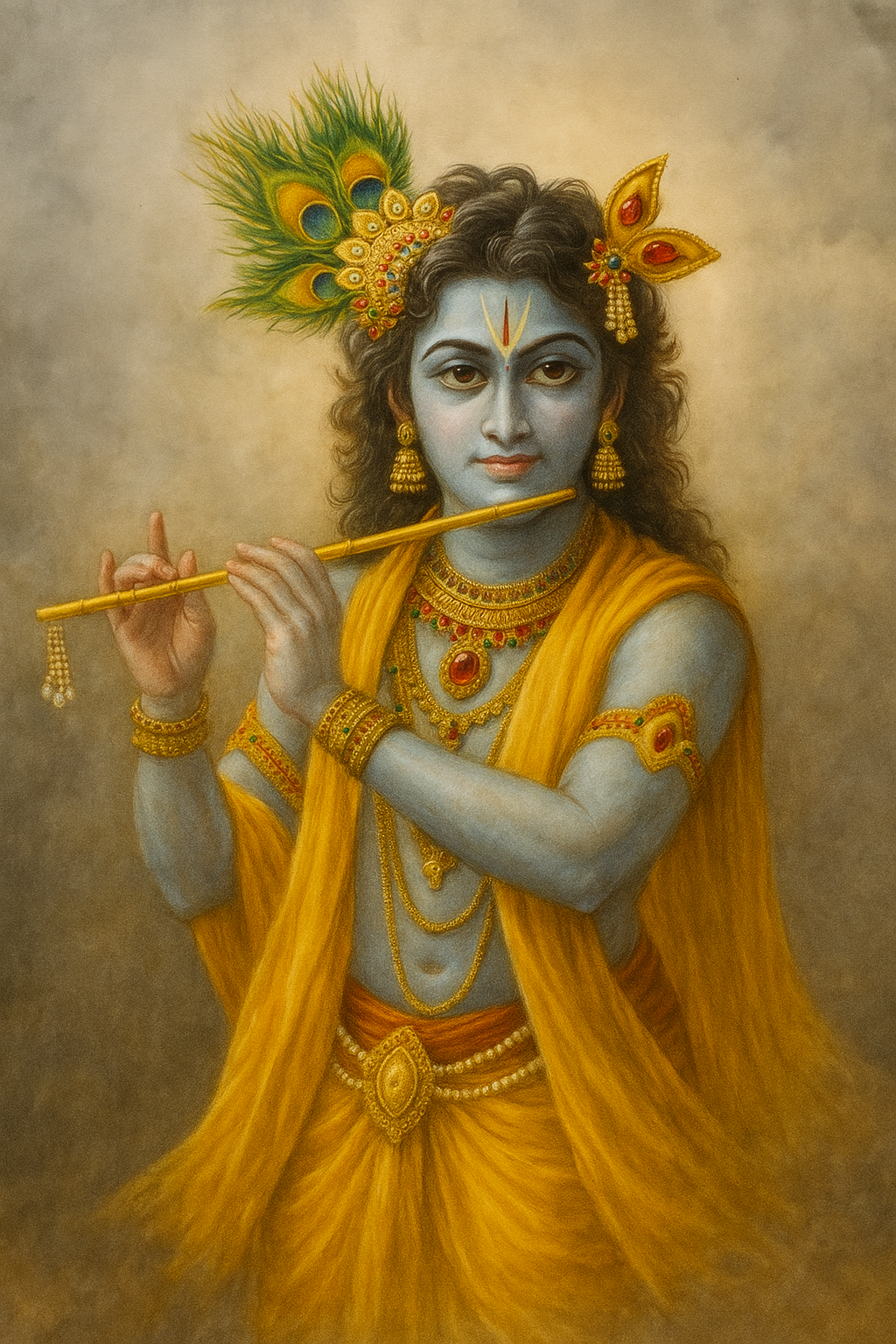
A single image of Lord Krishna can calm a busy room. In the artwork above, the youthful Krishna stands with a golden flute, a peacock feather crowning his curls, and bright yellow robes flowing like sunlight. This is the Murali-Manohar—the enchanter with the flute—whose symbols compress centuries of philosophy into a language anyone can feel. This guide decodes each visual element in the painting and shows how to bring its essence into daily life—whether you’re arranging a Krishna painting on canvas at home, looking for the right mantra, or building a content hub for devotees and culture-curious readers.What This Krishna Painting Communicates
- Flute (Murali): The hollow bamboo signifies an ego made empty so that divine music can pass through. It also embodies harmony—how multiple notes (people, duties, emotions) can coexist beautifully.
- Peacock Feather: A sign of beauty, grace, and the play of the universe. In many traditions it also hints at Krishna’s victory over pride (the peacock is proud, yet Krishna wears its feather lightly).
- Blue Complexion: Evokes the color of the vast sky and ocean—limitless, sheltering, and steady.
- Yellow Robes (Pitambara): Yellow represents the earth and wisdom; paired with blue, it balances transcendence with responsibility.
- Tilaka and Ornaments: The vertical tilaka marks devotion to Vishnu/Krishna. Ornaments highlight his role as beloved cowherd king, but also remind us that true wealth is inner joy.
Krishna’s Symbols, Canvas Prints Canada
1) The Flute: From Sound to Stillness
Krishna’s flute is the voice of bhakti (devotion). In practical terms:- Leadership Lesson: Emptying the flute equals emptying assumptions. Leaders who listen deeply create better “music” in teams.
- Mental Health Angle: To “become the flute” is to let go of constant self-talk, a technique overlapping with mindfulness.
- Family & Relationships: Harmony needs rhythm and space. The flute’s pauses are as important as its notes—so are healthy boundaries in love and parenting.
2) The Peacock Feather: Wearing Beauty Lightly
A peacock loves to display; Krishna turns that display into gentle humility. This is a teachable metaphor for social media culture: share your gifts, but wear praise lightly. “peacock feather symbolism Krishna,” “spiritual meaning of peacock feather at home”3) The Blue Skin: Infinite Yet Intimate
Blue stands for the infinite—but Krishna’s smile keeps infinity personal. Content creators can tie this to the Bhagavad Gita’s paradox: act in the world without being consumed by it. “why is Lord Krishna blue,” “Krishna meaning of blue color”4) Pitambara (Yellow Robes): Wisdom in Action
Yellow links to earth and learning. Together with blue, it suggests balanced living—spiritual depth with worldly competence. “pitambara meaning,” “symbolism of yellow robes in Hinduism”How to Place a Lord Krishna Painting at Home (With Vastu-Inspired Tips)
While practices vary by tradition, many householders follow these commonly shared guidelines:- Direction: Prefer east or northeast walls associated with clarity and sunrise.
- Eye Level Placement: Hang the painting so Krishna’s eyes meet yours when standing. This encourages mindful darshan (a reverent gaze).
- Clean, Calm Background: Keep the area uncluttered; consider a small diya (lamp) or incense during prayer times.
- Dining & Kitchen: Krishna is linked with food and nourishment (Makhan-chor, the butter thief). A small image near the dining space can be symbolic of gratitude—just keep it respectful and clean.
- Bedroom Considerations: If you place it in a bedroom, choose serene imagery (like Bal Gopal or Radha-Krishna in Vrindavan) to encourage a calm mind.
A Simple Krishna Meditation You Can Teach or Practice
- Seat & Breath: Sit comfortably. Inhale for four counts, exhale for four.
- Soft Gaze (Trataka): Look gently at Krishna’s eyes in the painting for 60–90 seconds, then close your eyes and visualize the same image.
- Mantra: Whisper one of Krishna’s names—“Govinda,” “Gopala,” or the Hare Krishna mantra—108 times or for 5 minutes.
- Reflect: Ask, “Where can I be more like the flute—open, listening, and kind?”
- Return: Open your eyes and offer a silent “thank you.”
Frequently Asked Questions (Great for ‘People Also Ask’)
Q1. Why is Krishna depicted as blue? Blue symbolizes the vast, protective, and infinite nature of the Divine—like sky and ocean—while keeping the deity accessible through a loving, human form.
Q2. What does Krishna’s flute represent? The flute stands for ego-lessness and divine music—when we empty ourselves of pride and noise, grace flows through us.
Q3. What is the meaning of the peacock feather? Beauty without arrogance. It also signals Krishna’s playful nature and victory over vanity.
Q4. Can I keep a Krishna painting in the bedroom? Yes, if the image inspires peace. Choose gentle depictions, keep the space tidy, and treat the artwork with respect.
Q5. Which mantra should I chant while meditating on Krishna? Many devotees recite the Hare Krishna maha-mantra, or short names like “Govinda” and “Gopala.” Select a mantra you can repeat sincerely.
Q6. Is Krishna different from Vishnu? Traditions vary. In Vaishnavism, Krishna is an avatar of Vishnu or, in some lineages, the Supreme Personality himself. Both perspectives honor the same divinity.
A Lord Krishna art painting on Canvas Print does more than decorate a wall; it invites a way of living—listening like a flute, wearing beauty lightly, and balancing the infinite with everyday responsibilities. For creators and brands, these symbols open a world of searchable, shareable, and meaningful content. For families and seekers, they offer simple practices that brighten ordinary days.
1) Choose Image Size & Pricing: ($)
2) Choose Frame Type and Color:
 None
None
 White(80)
 Black(80)
3) Choose Frame Thickness:
1.5"
¾"
Canvas Roll
4) Choose Easel Back:
 None
None
 Hanger Set(3.99)
Quantity
PRICE: 0.00 CAD
Canvas Print Description
🌟The Meaning Behind Lord Krishna’s Flute and Peacock Feather: A Practical Guide to Devotion, Décor, and Daily Joy🌟
A single image of Lord Krishna can calm a busy room. In the artwork above, the youthful Krishna stands with a golden flute, a peacock feather crowning his curls, and bright yellow robes flowing like sunlight. This is the Murali-Manohar—the enchanter with the flute—whose symbols compress centuries of philosophy into a language anyone can feel. This guide decodes each visual element in the painting and shows how to bring its essence into daily life—whether you’re arranging a Krishna painting on canvas at home, looking for the right mantra, or building a content hub for devotees and culture-curious readers.What This Krishna Painting Communicates
- Flute (Murali): The hollow bamboo signifies an ego made empty so that divine music can pass through. It also embodies harmony—how multiple notes (people, duties, emotions) can coexist beautifully.
- Peacock Feather: A sign of beauty, grace, and the play of the universe. In many traditions it also hints at Krishna’s victory over pride (the peacock is proud, yet Krishna wears its feather lightly).
- Blue Complexion: Evokes the color of the vast sky and ocean—limitless, sheltering, and steady.
- Yellow Robes (Pitambara): Yellow represents the earth and wisdom; paired with blue, it balances transcendence with responsibility.
- Tilaka and Ornaments: The vertical tilaka marks devotion to Vishnu/Krishna. Ornaments highlight his role as beloved cowherd king, but also remind us that true wealth is inner joy.
Krishna’s Symbols, Canvas Prints Canada
1) The Flute: From Sound to Stillness
Krishna’s flute is the voice of bhakti (devotion). In practical terms:- Leadership Lesson: Emptying the flute equals emptying assumptions. Leaders who listen deeply create better “music” in teams.
- Mental Health Angle: To “become the flute” is to let go of constant self-talk, a technique overlapping with mindfulness.
- Family & Relationships: Harmony needs rhythm and space. The flute’s pauses are as important as its notes—so are healthy boundaries in love and parenting.
2) The Peacock Feather: Wearing Beauty Lightly
A peacock loves to display; Krishna turns that display into gentle humility. This is a teachable metaphor for social media culture: share your gifts, but wear praise lightly. “peacock feather symbolism Krishna,” “spiritual meaning of peacock feather at home”3) The Blue Skin: Infinite Yet Intimate
Blue stands for the infinite—but Krishna’s smile keeps infinity personal. Content creators can tie this to the Bhagavad Gita’s paradox: act in the world without being consumed by it. “why is Lord Krishna blue,” “Krishna meaning of blue color”4) Pitambara (Yellow Robes): Wisdom in Action
Yellow links to earth and learning. Together with blue, it suggests balanced living—spiritual depth with worldly competence. “pitambara meaning,” “symbolism of yellow robes in Hinduism”How to Place a Lord Krishna Painting at Home (With Vastu-Inspired Tips)
While practices vary by tradition, many householders follow these commonly shared guidelines:- Direction: Prefer east or northeast walls associated with clarity and sunrise.
- Eye Level Placement: Hang the painting so Krishna’s eyes meet yours when standing. This encourages mindful darshan (a reverent gaze).
- Clean, Calm Background: Keep the area uncluttered; consider a small diya (lamp) or incense during prayer times.
- Dining & Kitchen: Krishna is linked with food and nourishment (Makhan-chor, the butter thief). A small image near the dining space can be symbolic of gratitude—just keep it respectful and clean.
- Bedroom Considerations: If you place it in a bedroom, choose serene imagery (like Bal Gopal or Radha-Krishna in Vrindavan) to encourage a calm mind.
A Simple Krishna Meditation You Can Teach or Practice
- Seat & Breath: Sit comfortably. Inhale for four counts, exhale for four.
- Soft Gaze (Trataka): Look gently at Krishna’s eyes in the painting for 60–90 seconds, then close your eyes and visualize the same image.
- Mantra: Whisper one of Krishna’s names—“Govinda,” “Gopala,” or the Hare Krishna mantra—108 times or for 5 minutes.
- Reflect: Ask, “Where can I be more like the flute—open, listening, and kind?”
- Return: Open your eyes and offer a silent “thank you.”
Frequently Asked Questions (Great for ‘People Also Ask’)
Q1. Why is Krishna depicted as blue? Blue symbolizes the vast, protective, and infinite nature of the Divine—like sky and ocean—while keeping the deity accessible through a loving, human form.
Q2. What does Krishna’s flute represent? The flute stands for ego-lessness and divine music—when we empty ourselves of pride and noise, grace flows through us.
Q3. What is the meaning of the peacock feather? Beauty without arrogance. It also signals Krishna’s playful nature and victory over vanity.
Q4. Can I keep a Krishna painting in the bedroom? Yes, if the image inspires peace. Choose gentle depictions, keep the space tidy, and treat the artwork with respect.
Q5. Which mantra should I chant while meditating on Krishna? Many devotees recite the Hare Krishna maha-mantra, or short names like “Govinda” and “Gopala.” Select a mantra you can repeat sincerely.
Q6. Is Krishna different from Vishnu? Traditions vary. In Vaishnavism, Krishna is an avatar of Vishnu or, in some lineages, the Supreme Personality himself. Both perspectives honor the same divinity.
A Lord Krishna art painting on Canvas Print does more than decorate a wall; it invites a way of living—listening like a flute, wearing beauty lightly, and balancing the infinite with everyday responsibilities. For creators and brands, these symbols open a world of searchable, shareable, and meaningful content. For families and seekers, they offer simple practices that brighten ordinary days.

Loading...
